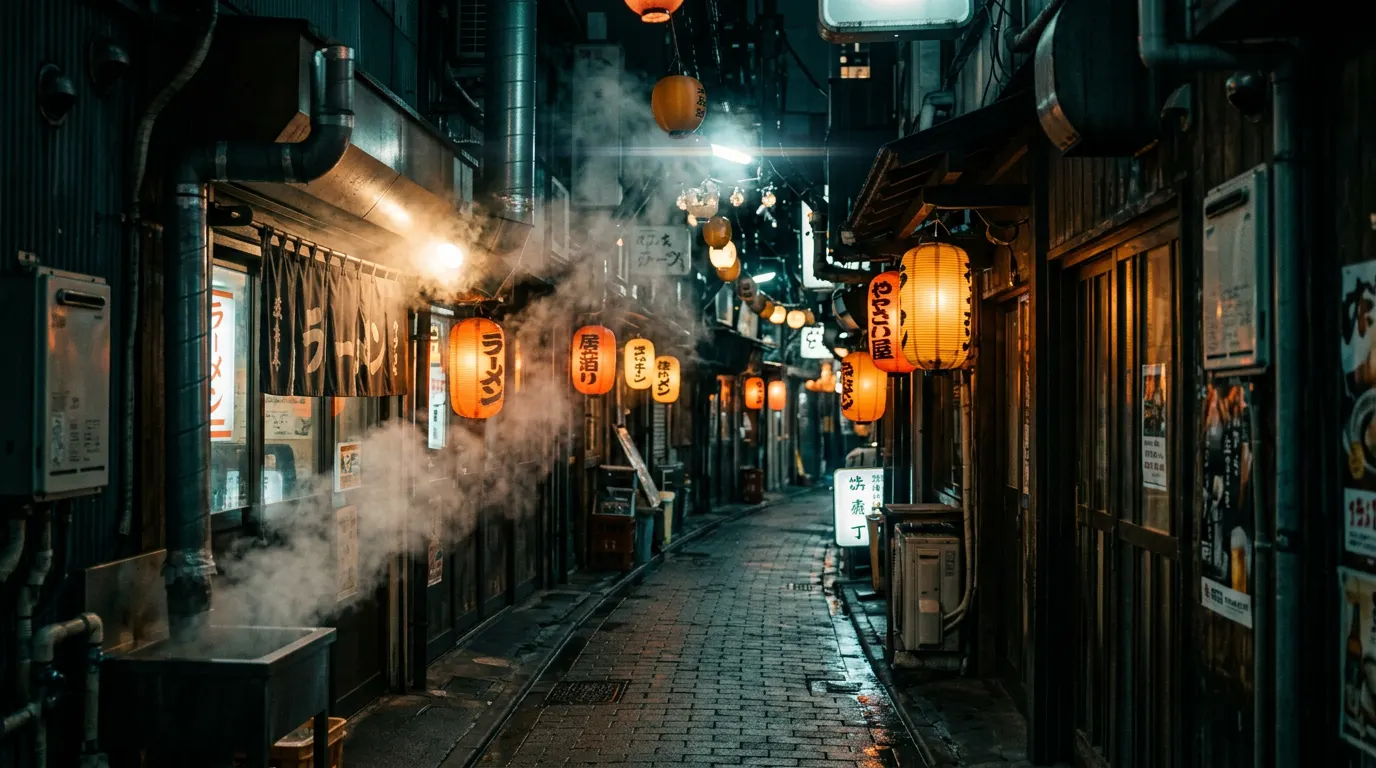
Some cities are photographed. Tokyo is lit. After midnight, when the last trains pull away and the salarymen thin into the side streets, Shinjuku becomes a set nobody built on purpose.
The light that does the talking
Every sign is a key light. Every puddle is a bounce card. Walk three blocks through Kabukichō and you will pass more colour temperatures than most productions use in a month — sodium amber, ramen-shop fluorescent, the cold magenta of a pachinko parlour bleeding into the rain.
"You don't need to light Tokyo at night. You just need to decide where to stand."
Where to stand
Start at the east exit and drift north. Golden Gai rewards patience: six alleys, two hundred bars, most of them seating eight. Order a highball, ask nothing, and watch how the bartender's face changes under the single bulb above the counter. That is the whole lesson.
The hour before dawn
By four a.m. the city exhales. Steam rises from grates, the vending machines hum, and the neon starts to look tired. This is the best hour — the one that never makes it into the brochure, and always makes it into the film.
Next story